There’s a quiet revolution happening in nail art, and it’s turning away from the flashy to embrace the nuanced. The image we’re exploring today defies expectations by prioritizing texture, dimension, and atmosphere over bold colors or exaggerated forms. It’s a lesson in restraint, where every brushstroke and adhesive application feels deliberate, almost theatrical.
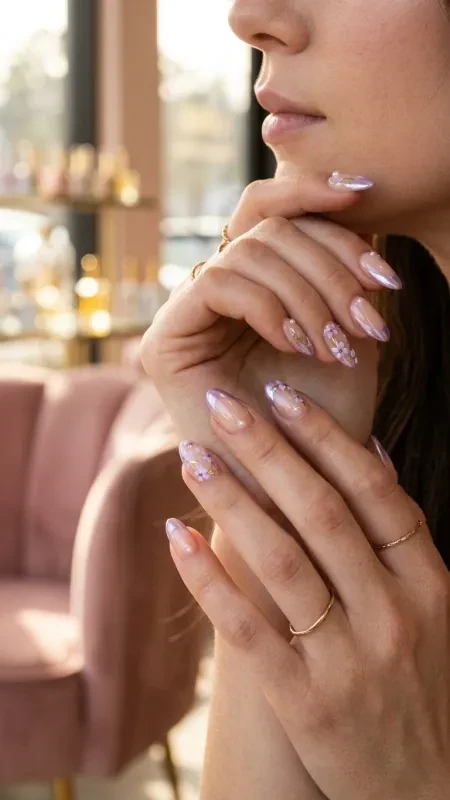
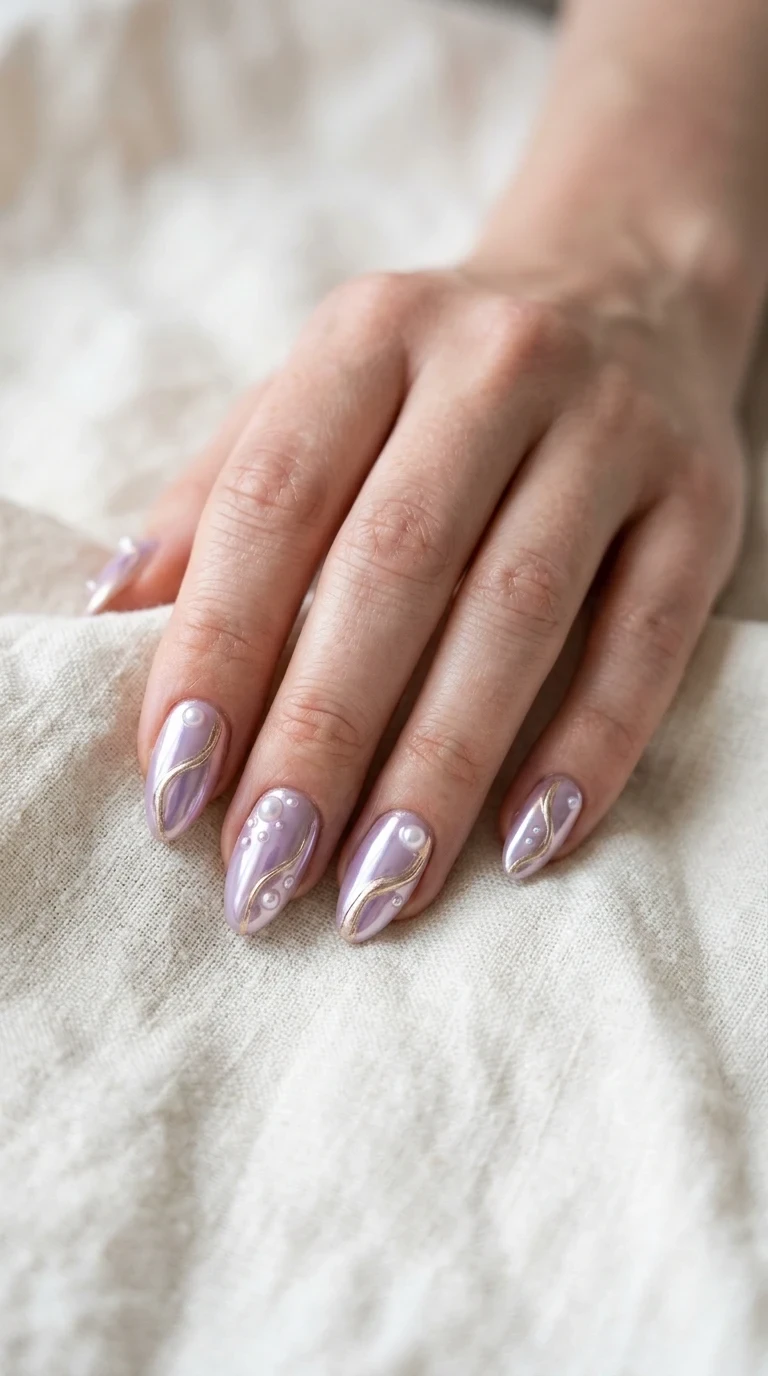
The composition centers on a single nail, cropped tightly to isolate it from distraction. The lighting is soft yet directional, casting delicate shadows that accentuate the raised edges and layered details of the design. Instead of flat, petal-like shapes, the flowers here resemble tiny watercolor sketches—fuzzy, uneven, and alive with organic imperfection. The materials seem unconventional: what appear to be thin, crimped foils or metallic threads mimic stems and veins, while the "petals" could be hand-torn lace or finely cut fabric. The palette is muted—earthy greens, warm tans, and metallic silver—allowing the tactile elements to dominate. The mood is intimate, almost cinematic, as if each nail were a close-up from a fashion film shot in gold-hour light.
What’s striking isn’t the final product’s resemblance to a real flower, but how it *feels*. The design invites touch, promising a contrast of smooth gel and rough texture under the fingertips. This is nail art for those who appreciate subtlety: the kind that sparks conversation not because of its volume, but its precision. For creators, it’s a challenge to embrace "flaws" as storytelling devices—uneven layers suggest spontaneity, while the metallic veins add a whisper of luxury. The lesson? Sometimes, the most captivating nail flowers aren’t the ones that bloom in Technicolor, but those that whisper.
To recreate this effect, start with a textured base coat or a lightly distressed gel polish to mimic aged paper or crinkled fabric. Use fine-tip brushes to apply adhesive in irregular lines, then layer in thin strips of metallic thread or foil for stems and veins. For petals, experiment with torn lace, dried floral petals, or even ultra-fine mesh—anything that disrupts the smooth surface. Seal with a glossy top coat, but leave small areas exposed to reveal the raw texture beneath. Lighting plays a critical role: photograph your work under diffused light to highlight the depth, or use a ring light to cast shadows that emphasize raised details.
This approach isn’t just about technique; it’s a philosophy. It asks artists to consider *why* they’re creating nail art—to convey emotion, tell a story, or evoke a tactile experience rather than simply fill space with color. In a world of oversaturated visuals, this quiet rebellion might just be what clients crave next.